|
|
|
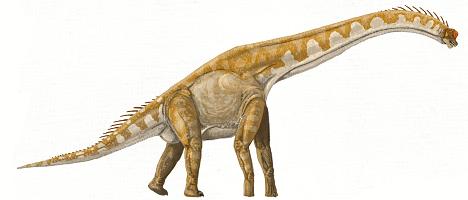
Giraffatitan
Giraffatitan was a massive plant-eating dinosaur that lived in Africa during
the late Jurassic period
and perhaps into the early
Cretaceous period,
between about 154 and 142 million years ago.
It was closely related to Brachiosaurus
(which lived in North America), and indeed some scientists argue that it should be
classified as a type of
It was closely related to Brachiosaurus.
Like Brachiosaurus,
Giraffatitan was very large and heavy. It grew to perhaps 75 feet (22.9 meters) long, and weighed around 89 tons.
Also like
Brachiosaurus,
Giraffatitan's front limbs were long than its hind limbs, and this feature, together with its long neck,
allowed it to browse the foliage at the tops of tall trees.

Giraffatitan was a herbivore (plant-eater) that lived from 154 to 142 million years ago

Related Information & Resources
See Also

Giraffatitan Facts
Here is a summary of some of the key facts about Giraffatitan:
- Giraffatitan was a genus of dinosaur. Some scientists have argued that Giraffatitan should be classified as a species of Brachiosaurus.
- "Giraffatitan" means "giraffe titan".
- Giraffatitan was a member of the Saurischia ("lizard-hipped") order of dinosaurs. What this means, is that although Giraffatitan was not closely related to lizards, it did have similarly shaped pelvic bones.
- Giraffatitan was a Sauropod - a member of a group of related large quadrupedal herbivorous (plant-eating) dinosaur with long necks.
- Giraffatitan lived between about 154 million years ago and 142 million years ago, during the late Jurassic and early Cretaceous periods.
- Giraffatitan lived in Africa.
- Giraffatitan was a herbivore (plant-eater).
- Giraffatitan was about 75 feet (22.9 meters) long.
- Giraffatitan weighed about 89 tons.
Giraffatitan Books Here are some books from Amazon.com:
Disclosure: Products details and descriptions provided by Amazon.com. Our company may receive a payment if you purchase products from them after following a link from this website.
By Source: Wikipedia
Books LLC, Reference Series Paperback (44 pages)
 | List Price: $14.14* Lowest New Price: $14.13* Usually ships in 24 hours* *(As of 16:32 Pacific 17 May 2012 More Info)
Click Here | Product Description: Fuente: Wikipedia. Páginas: 42. Capítulos: Massospondylus, Spinosaurus, Brachiosaurus, Aardonyx, Carcharodontosaurus, Ceratosaurus, Giraffatitan, Megapnosaurus, Sigilmassasaurus, Antetonitrus, Kentrosaurus, Afrovenator, Ouranosaurus, Dryosaurus, Deltadromeus, Lesothosaurus, Berberosaurus, Jobaria, Elaphrosaurus, Heterodontosaurus, Nigersaurus, Suchomimus, Aegyptosaurus, Abrictosaurus, Bahariasaurus, Lurdusaurus, Eocursor, Rebbachisaurus, Eocarcharia, Spinophorosaurus, Euskelosaurus, Paralititan, Tornieria, Janenschia, Rugops, Lycorhinus, Azendohsaurus, Eucnemesaurus, Plateosauravus, Australodocus, Melanorosaurus, Dicraeosaurus, Paranthodon, Stormbergia, Tazoudasaurus, Atlasaurus, Chebsaurus, Kryptops, Tendaguria, Kemkemia, Elrhazosaurus, Malawisaurus, Lanasaurus, Cristatusaurus, Dracovenator, Blikanasaurus, Aetonyx, Nqwebasaurus, Vulcanodon, Kangnasaurus, Pachyspondylus, Spinostropheus, Geranosaurus, Aliwalia, Karongasaurus, Gigantoscelus, Leptospondylus, Ignavusaurus, Algoasaurus, Fabrosaurus, Spinosaurus aegyptiacus, Gryponyx. Extracto: Massospondylus (gr. "vértebra elongada") es un género representado por una única especie de dinosaurio prosaurópodo masospondílido que vivió a principios del período Jurásico, entre 200 a 183 millones de años, desde el Hetangiano al Pliensbachiano en África. Descrita por Sir Richard Owen en 1854 a partir de restos descubiertos en Sudáfrica, siendo uno de los primeros dinosaurios en ser nombrado. Fósiles de este han sido encontrados en distintos lugares de Sudáfrica, Lesotho y Zimbabwe. Material adicional encontrado en la Formación Kayenta de Arizona , la India y Argentina han sido antiguamente asignados a este género, pero hoy se los considera distintos a Massospondylus. Massospondylus fue un típico prosaurópodo de cuello medio largo y piernas delgadas. Por un tiempo se creyó que Massospondylus era omnívoro pero ha habido nuevos descubrimientos que demuestran que era herbívoro. Este dato lo acerca más a sus descendientes. Para ... |
|
By Source: Wikipedia
Books LLC, Reference Series Paperback (58 pages)
 | List Price: $19.99* Lowest New Price: $19.98* Usually ships in 24 hours* *(As of 16:32 Pacific 17 May 2012 More Info)
Click Here | Product Description: Fuente: Wikipedia. Páginas: 56. Capítulos: Brachiosauridae, Titanosauria, Brachiosaurus, Antarctosaurus, Sauroposeidon, Camarasaurus, Giraffatitan, Rapetosaurus, Argentinosaurus, Europasaurus, Puertasaurus, Pelorosaurus, Aeolosaurus, Opisthocoelicaudia, Alamosaurus, Eucamerotus, Laplatasaurus, Rinconsaurus, Andesaurus, Ischyrosaurus, Ampelosaurus, Abrosaurus, Austrosaurus, Ornithopsis, Bruhathkayosaurus, Aegyptosaurus, Paluxysaurus, Chiayusaurus, Argyrosaurus, Titanosaurus, Astrodon, Rocasaurus, Aepisaurus, Mendozasaurus, Bonitasaura, Saltasauridae, Paralititan, Futalognkosaurus, Chondrosteosaurus, Wintonotitan, Janenschia, Uberabatitan, Quaesitosaurus, Adamantisaurus, Nemegtosaurus, Qiaowanlong, Maxakalisaurus, Huanghetitan, Nemegtosauridae, Gondwanatitan, Bonatitan, Sonidosaurus, Chubutisaurus, Cedarosaurus, Lapparentosaurus, Tienshanosaurus, Tangvayosaurus, Magyarosaurus, Bellusaurus, Epachthosaurus, Diamantinasaurus, Aragosaurus, Bothriospondylus, Phuwiangosaurus, Daxiatitan, Isisaurus, Atlasaurus, Malarguesaurus, Borealosaurus, Lusotitan, Paludititan, Jainosaurus, Traukutitan, Barrosasaurus, Ruyangosaurus, Huabeisaurus, Abydosaurus, Campylodoniscus, Pitekunsaurus, Amargatitanis, Muyelensaurus, Baurutitan, Sulaimanisaurus, Dongbeititan, Neuquensaurus, Ligabuesaurus, Volkheimeria, Arkharavia, Malawisaurus, Daanosaurus, Pellegrinisaurus, Dinodocus, Macrurosaurus, Tastavinsaurus, Sonorasaurus, Fukuititan, Panamericansaurus, Khetranisaurus, Trigonosaurus, Baotianmansaurus, Qingxiusaurus, Hypselosaurus, Gobititan, Domeykosaurus, Lirainosaurus, Dashanpusaurus, Venenosaurus, Pakisaurus, Pukyongosaurus, Mongolosaurus, Dongyangosaurus, Jiangshanosaurus, Loricosaurus, Atsinganosaurus, Iuticosaurus, Clasmodosaurus, Karongasaurus, Andesauridae, Fusuisaurus, Tapuiasaurus, Titanosauriformes, Lognkosauria, Caulodon, Astrodonius, Rinconsauria, Marmarospondylus, Camarasauridae, Camarasauromorpha, Titanosauridae, Eutitanosauria. Extracto: Brachiosaurus (del griego «βραχιων» b... |
|
By Gregory S. Paul
Princeton University Press Hardcover (320 pages)
 | List Price: $35.00* Lowest New Price: $22.47* Lowest Used Price: $19.75* Usually ships in 24 hours* *(As of 16:32 Pacific 17 May 2012 More Info)
Click Here | Product Description:
This lavishly illustrated volume is the first authoritative dinosaur book in the style of a field guide. World-renowned dinosaur illustrator and researcher Gregory Paul provides comprehensive visual and textual coverage of the great Mesozoic animals that gave rise to the living dinosaurs, the birds. Incorporating the new discoveries and research that are radically transforming what we know about dinosaurs, this book is distinguished both by its scientific accuracy and the quality and quantity of its illustrations. It presents thorough descriptions of more than 735 dinosaur species and features more than 600 color and black-and-white images, including unique skeletal drawings, "life" studies, and scenic views--illustrations that depict the full range of dinosaurs, from small, feathered creatures to whale-sized supersauropods. Heavily illustrated species accounts of the major dinosaur groups are preceded by an extensive introduction that covers dinosaur history and biology, the extinction of nonavian dinosaurs, the origin of birds, and the history of dinosaur paleontology--and that also gives a taste of what it might be like to travel back to the time of the dinosaurs. The Princeton Field Guide to Dinosaurs is a must-have for anyone who loves dinosaurs, from the amateur enthusiast to the professional paleontologist. - The first authoritative field guide to dinosaurs
- Covers more than 735 species
- Beautiful, large-format volume
- Lavishly illustrated throughout, with more than 600 color and black-and-white drawings and figures, including:
- More than 130 color life studies, including scenic views
- Close to 450 skeletal, skull, head, and muscle drawings
- 8 color paleo-distribution maps
- Color timeline
- Describes anatomy, physiology, locomotion, reproduction, and growth of dinosaurs, as well as the origin of birds and the extinction of nonavian dinosaurs
|
|
Springer Hardcover (233 pages)
 | List Price: $129.00* Lowest New Price: $102.63* Lowest Used Price: $104.97* Usually ships in 24 hours* *(As of 16:32 Pacific 17 May 2012 More Info)
Click Here | Product Description: Computational paleontology is simply a term applied to using computers and its facilities in the field of paleontology. However, we should be exactly precise in describing the term through explaining the main themes of this motivating and attractive scientific field. The uppermost aim of this book is to explain how computation could be competent in fetching fossils to life and the past to present. Computers for paleontologists save time and costs, interpret mysterious events precisely and accurately, visualize the ancient life definitely and undeniably. |
|
By Beatriz Scaglia
Webster's Digital Services Paperback (272 pages)
 | List Price: $27.75* Lowest New Price: $19.41* Usually ships in 2 to 3 weeks* *(As of 16:32 Pacific 17 May 2012 More Info)
Click Here | Product Description: Please note that the content of this book primarily consists of articles available from Wikipedia or other free sources online. Dominant for over 160 million years during the Triassic Period through the Cretaceous Period, Dinosaurs were a diverse and varied grouping of animals, including over 9,000 bird species. Dinosaur fossils have been found on every continent and paleontologists and paleobiologists continue to gather information on the different species. Some were herbivores, others carnivorous, some bipedal, others quadrupedal and other had wings to fly. This book explores the Sauropods (Sauropoda) and Theropods (Theropoda) dinosaurs classified by largest and smallest size categories. Project Webster represents a new publishing paradigm, allowing disparate content sources to be curated into cohesive, relevant, and informative books. To date, this content has been curated from Wikipedia articles and images under Creative Commons licensing, although as Project Webster continues to increase in scope and dimension, more licensed and public domain content is being added. We believe books such as this represent a new and exciting lexicon in the sharing of human knowledge. |
|
By Beatriz Scaglia
Webster's Digital Services Paperback (252 pages)
 | List Price: $26.75* Lowest New Price: $18.71* Lowest Used Price: $18.77* Usually ships in 2 to 3 weeks* *(As of 16:32 Pacific 17 May 2012 More Info)
Click Here | Product Description: Please note that the content of this book primarily consists of articles available from Wikipedia or other free sources online. Dominant for over 160 million years during the Triassic Period through the Cretaceous Period, Dinosaurs were a diverse and varied grouping of animals, including over 9,000 bird species. Dinosaur fossils have been found on every continent and paleontologists and paleobiologists continue to gather information on the different species. Some were herbivores, others carnivorous, some bipedal, others quadrupedal and other had wings to fly. This book explores the heaviest by weight, longest by length, lightest by weight and shortest by length of the dinosaurs plus feathered dinosaurs and their close relation to birds. Project Webster represents a new publishing paradigm, allowing disparate content sources to be curated into cohesive, relevant, and informative books. To date, this content has been curated from Wikipedia articles and images under Creative Commons licensing, although as Project Webster continues to increase in scope and dimension, more licensed and public domain content is being added. We believe books such as this represent a new and exciting lexicon in the sharing of human knowledge. |
|
By Anusuya Chinsamy-Turan
Struik Publishers Paperback (64 pages)
 | List Price: $13.95* Lowest New Price: $19.89* Lowest Used Price: $16.90* *(As of 16:32 Pacific 17 May 2012 More Info)
Click Here | Product Description: Although African dinosaurs make a significant contribution to palaeontology, they are often omitted from books in favor of better-known species like T. Rex. But their fossils have been discovered across the continent - from the Sahara Desert and the dusty plains of Kenya and Tanzania to the sandstone flats of the Karoo - and they are no less magnificent or fascinating than their 'celebrity' cousins. Famous Dinosaurs of Africa is written for children, but has broad appeal for anyone interested in learning more about dinosaurs. A brief general introduction is followed by short chapters on dinosaur species, among them those that were fish-eating, sociable, predatory, etc, as well as those that were cannibals, and the biggest meat-eating dinosaur of all time - the thread being that they all come from Africa. Details are given about where they were found, the meaning of their scientific names, and their size and diet. Spectacular, colorful illustrations bring the creatures vividly to life; photographs, maps and line drawings further illustrate the subject, while 'Unsolved' and 'Up-close' panels add to the intrigue. With a large, pullout poster, this is a most attractive and inspirational book. |
|
| Dinozaury Afryki: Allozaur, Dysalotosaurus, Dikreozaur, Spinozaur, Giraffatitan, Ceratozaur, Sigilmassazaur, Abriktozaur, Afrowenator, Gryponyx, ... Nigerzaur, Aardonyx (Polish Edition) |
By ródo: Wikipedia
Books LLC, Wiki Series Paperback (44 pages)
| List Price: $14.14* Lowest New Price: $14.14* Lowest Used Price: $17.34* Temporarily out of stock. Order now and we'll deliver when available. We'll e-mail you with an estimated delivery date as soon as we have more information. Your credit card will not be charged until we ship the item.* *(As of 16:32 Pacific 17 May 2012 More Info)
Click Here | Product Description: Źródło: Wikipedia. Strony: 43. Rozdziały: Allozaur, Dysalotosaurus, Dikreozaur, Spinozaur, Giraffatitan, Ceratozaur, Sigilmassazaur, Abriktozaur, Afrowenator, Gryponyx, Jobaria, Arcusaurus, Angolatitan, Spinostrof, Berberozaur, Atlazaur, Megapnozaur, Nigerzaur, Aardonyx, Elafrozaur, Lesotozaur, Masospondyl, Deltadrom, Rebbachizaur, Barozaur, Euknemezaur, Spinophorosaurus, Eokursor, Eokarcharia, Ignavusaurus, Antetonitrus, Rugops, Parantodon, Suchomim, Baharijazaur, Karcharodontozaur, Elrhazosaurus, Lurduzaur, Kemkemia, Drakowenator, Australodok, Kentrozaur, Kryptops, Heterodontozaur, Tazoudazaur, Stormbergia, Uranozaur, Wulkanodon, Egiptozaur, Likorin, Fabrozaur, Blikanazaur, Malawizaur, Euskelozaur, Chebzaur, Krystatuzaur, Melanorozaur, Geranozaur, Kangnazaur, Lanazaur, Etonyks, Nkwebazaur, Algoazaur, Paralitytan, Janenszja, Karongazaur, Tornieria, Tendaguria, Totobolozaur. Fragment: Allozaur (Allosaurus) - rodzaj dużego teropoda z rodziny allozaurów (Allosauridae) żyjącego w późnej jurze, 155-145 mln lat temu. Nazwa Allosaurus, oznaczająca „inny jaszczur", pochodzi od greckich słów /allos („inny", „dziwny") oraz /sauros („jaszczur"). Pierwsze szczątki z pewnością należące do przedstawicieli tego rodzaju zostały opisane w 1877 roku przez Othniela Charlesa Marsha. Jako jeden z pierwszych dobrze poznanych teropodów przez długi czas wzbudzał zainteresowanie kręgów pozapaleontologicznych i był dinozaurem często pojawiającym się w filmach fabularnych i dokumentalnych. Allosaurus był dużym dwunożnym drapieżnikiem z wielką, wyposażoną w ostre zęby czaszką. Mierzył przeciętnie 8,5 m długości, jednak fragmentaryczne szczątki sugerują, że mógł osiągać ponad 12 m. W porównaniu z potężnymi tylnymi kończynami trójpalczaste kończyny przednie były niewielkie, a całe ciało równoważył długi, ciężki ogon. Allosaurus jest klasyfikowany w rodzinie Allosauridae, należącej do karnozaurów. Rodzaj ma skomplikowaną historię taksonomiczną i obejmuje nieokreśloną liczbę akceptowanych gat... |
|

Discuss This Page
Linking to This Page
We do hope that you find this site useful.
We welcome people linking to this website, or citing us in their school and educational projects
(remember in school projects and papers, you should always cite your sources).
|
|
|