Massospondylus Dinosaur Facts
Welcome


Dinosaur Books
   Dinotopia
   Fiction
   Jurassic Park
   Kids
   Pop-Up Books
   Science
   Sticker Books
   Walking With Dinosaurs
   More Dinosaur Books


Dinosaur Calendars


Dinosaur Clothes


Dinosaur Crosswords


Dinosaur Facts
   Amazing Dinosaurs
   Classification
      Ornithischia
         Ankylosaurs
         Ceratopsians
         Marginocephalia
         Ornithopods
         Pachycephalosaurs
         Stegosaurs
      Saurischia
         Prosauropods
         Sauropods
         Theropods
   Definition
   Diet
   Eggs
   Extinction
   Family Tree
   Fossils
         Footprints
   Life Span
   Living Dinosaurs?
   Myths
   Timeline
      Triassic Period
      Jurassic Period
      Cretaceous Period
   World
      African Dinosaurs
      Antarctic Dinosaurs
      Asian Dinosaurs
      Australian Dinosaurs
      European Dinosaurs
      Indian Dinosaurs
      N. American Dinosaurs
      S. American Dinosaurs


Dinosaur Fun
   Action Figures
   Games
   Jigsaws
   Lego
   Lunchboxes
   Models
   Placemats
   Plush Toys
   More Dinosaur Fun


Dinosaur Games


Dinosaur Jokes


Dinosaur Museums
   UK Dinosaur Museums
   USA Dinosaur Museums
   More Dinosaur Museums


Dinosaur Names


Dinosaur Pictures


Dinosaur Posters


Dinosaur Scientists
   Charles Darwin
   Mary Anning
   Sir Richard Owen
   More Dinosaur Scientists


Dinosaur Software


Dinosaur Toys


Dinosaur Types
   Allosaurus
   Ankylosaurus
   Apatosaurus
   Baryonyx
   Brachiosaurus
   Centrosaurus
   Ceratosaurus
   Coelophysis
   Deinonychus
   Dilophosaurus
   Diplodocus
   Euoplocephalus
   Iguanodon
   Kentrosaurus
   Lambeosaurus
   Maiasaura
   Megalosaurus
   Microraptor
   Monoclonius
   Pachycephalosaurus
   Parasaurolophus
   Pentaceratops
   Protoceratops
   Saltopus
   Saurolophus
   Seismosaurus
   Spinosaurus
   Stegosaurus
   Styracosaurus
   Supersaurus
   Triceratops
   Tyrannosaurus Rex
   Velociraptor
   More Dinosaur Types


Dinosaur Video Games


Dinosaur Videos
   DVDs
      Jurassic Park
      Walking With Dinosaurs
   VHS Video


Dinosaur Word Search


Other Prehistoric Animals
   Aetosaurs
   Ambulocetus
   Ammonites
   Andrewsarchus
   Archaeopteryx
   Basilosaurus
   Belemnites
   Brontotheres
   Chalicotheres
   Champsosaurs
   Coelacanth
   Cynodonts
   Dicynodonts
   Dimetrodon
   Gastornis
   Glyptodonts
   Gorgonopsians
   Hesperornis
   Hyracotherium
   Ichthyosaurs
   Mammal-like Reptiles
   Mammoths
   Mastodons
   Megaloceros
   Megalodon
   Meganeura Monyi
   Megatherium
   Mosasaurs
   Moschops
   Pakicetus
   Paraceratherium
   Phorusrhacids
   Placoderms
   Plesiosaurs
   Pliosaurs
   Pterosaurs
   Sea Scorpions
   Smilodon
   Spiny Sharks
   Tiktaalik
   Titanoboa
   Trilobites
   More Prehistoric Animals


Dinosaur Links
   Dinosaur Hangman
   Dinosaurs News
   Dinosaurs Parks

Educational Products
(Advertisements)
   Make Math Fun!
   Super Science Projects
   24 Hour Science

Science Links
   Science Downloads
   Science eBooks


Dinosaur Jungle   >   Dinosaur Names   >   Massospondylus
Dinosaur Jungle   >   Dinosaur Types   >   Massospondylus

Massospondylus


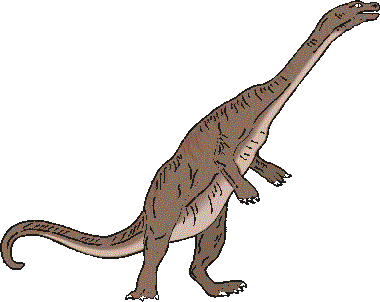
dinosaur picture massospondylus

Click here for more Massospondylus Pictures


Scientific Classification
  Kingdom Animalia
  Phylum Chordata
  Class Sauropsida
  Superorder Dinosauria
  Order Saurischia
  Suborder Sauropodomorpha
  Infraorder Prosauropoda
  Family Plateosauridae
  Genus Massospondylus
Massospondylus was a herbivore (plant-eater) that lived in Southern Africa and North America, about 208 to 204 million years ago, during the early Jurassic period.

Massospondylus was around 13 feet (4 meters) long, and its name, chosen by Sir Richard Owen (who also coined the term of "dinosaur") means "massive vertebra" or "elongated vertebra" (referring to the large bones in the creature's neck).

Massospondylus had a tiny head on the end of a very long and flexible neck. Its hands had five fingers, and could be used for both walking and grasping, and its thumbs were each equipped with a large claw.

Polished stones ("gastroliths") have been found inside Massospondylus skeletons. Just like many birds do, Massospondylus is believed to have swallowed stones to help it grind up tough food. When the stones were worn smooth and of no further use, Massospondylus would have regurgitated the stones, and swallowed new rough rocks to replace them.

Six Massospondylus eggs were found in South Africa in the 1970s. When the eggs were finally opened and the fossilized extracted after a 30 year wait, the eggs were found to contain near-hatchlings with no teeth. The lack of teeth has led some scientists to conclude that some degree of after-birth care may have been necessary, because the hatchlings would probably have been unable to feed themselves.

24 Hour Science Projects

Massospondylus Timeline:


Massospondylus was a herbivore (plant-eater) that lived from 208 to 204 million years ago

Massospondylus was a herbivore (plant-eater) that lived from 208 to 204 million years ago

Making Math More Fun - Math Games Package

Related Information & Resources


See Also
Making Math More Fun - Math Games Package

Massospondylus Facts


Here is a summary of some of the key facts about Massospondylus:
  1. Massospondylus was a genus of dinosaur.

  2. "Massospondylus" means "longer vertebra". This name was chosen by Sir Richard Owen in 1854.

  3. Massospondylus was a member of the Saurischia ("lizard-hipped") order of dinosaurs. What this means, is that although Massospondylus was not closely related to lizards, it did have similarly shaped pelvic bones.

  4. Massospondylus was a Prosauropod - a member of a group of related early herbivorous (plant-eating) dinosaurs which had long necks, small heads, shorter forelimbs than hind limbs, and a thumb claw.

  5. Massospondylus lived between about 208 million years ago and 204 million years ago, during the late Jurassic period.

  6. Massospondylus lived in North America and Southern Africa.

  7. Massospondylus was a herbivore (plant-eater).

  8. Massospondylus is thought to have swallowed stones which would have been used to help grind up tough plant material (some modern birds do the same thing). Fossils of these stones ("gastroliths") have been found in the same rocks as Massospondylus.

  9. Massospondylus was about 13 feet (4 meters) long.

Massospondylus Books


Here are some books from Amazon.com:

Disclosure: Products details and descriptions provided by Amazon.com. Our company may receive a payment if you purchase products from them after following a link from this website.

Massospondylus: Genus, Prosauropoda, Dinosaur, Jurassic, Geologic time scale, Hettangian, Pliensbachian, Stage (stratigraphy), Annum, Richard Owen, Kayenta Formation, Type species
Alphascript Publishing
Paperback (144 pages)

Massospondylus: Genus, Prosauropoda, Dinosaur, Jurassic, Geologic time scale, Hettangian, Pliensbachian, Stage (stratigraphy), Annum, Richard Owen, Kayenta Formation, Type species
List Price: $65.00*
Lowest New Price: $58.50*
Lowest Used Price: $142.90*
Usually ships in 24 hours*
*(As of 00:14 Pacific 3 Sep 2010 More Info)


Click Here
Product Description:
High Quality Content by WIKIPEDIA articles! Massospondylus is a genus of prosauropod dinosaur from the early Jurassic Period (Hettangian to Pliensbachian ages, ca. 200?183 million years ago). It was described by Sir Richard Owen in 1854 from remains found in South Africa, and is thus one of the first dinosaurs to have been named. Fossils have since been found at other locations in South Africa, Lesotho, and Zimbabwe. Further material from Arizona's Kayenta Formation, India, and Argentina has been assigned to this genus, but may not belong to Massospondylus. The type, and only universally recognized, species, is M. carinatus, although six other species have been named during the past 150 years. Prosauropod systematics have undergone numerous revisions during the last several years, and many scientists disagree where exactly Massospondylus lies on the dinosaur evolutionary tree
Prosauropods: Plateosaurus, Massospondylus, Aardonyx, Prosauropoda, Unaysaurus, Lufengosaurus, Yunnanosaurus, Riojasaurus, Gyposaurus
Books LLC
Paperback (120 pages)

Prosauropods: Plateosaurus, Massospondylus, Aardonyx, Prosauropoda, Unaysaurus, Lufengosaurus, Yunnanosaurus, Riojasaurus, Gyposaurus
List Price: $19.99*
Lowest New Price: $19.99*
Lowest Used Price: $21.48*
Usually ships in 24 hours*
*(As of 00:14 Pacific 3 Sep 2010 More Info)


Click Here
Product Description:
Purchase includes free access to book updates online and a free trial membership in the publisher's book club where you can select from more than a million books without charge. Chapters: Plateosaurus, Massospondylus, Aardonyx, Prosauropoda, Unaysaurus, Lufengosaurus, Yunnanosaurus, Riojasaurus, Gyposaurus, Massospondylidae, Mussaurus, Eucnemesaurus, Plateosauravus, Massopoda, Riojasauridae, Jingshanosaurus, Euskelosaurus, Plateosauria, Ruehleia, Thotobolosaurus, Anchisauria, Plateosauridae, Yimenosaurus, Lessemsaurus, Aetonyx, Coloradisaurus, Archaeodontosaurus, Fulengia, Gongxianosaurus. Excerpt: Aardonyx Fossil range: Early Jurassic , 195 Ma Pre O S D C P T J K Pg N Aardonyx (Afrikaans aard , "earth" + Greek onux , "nail, claw") is a genus of prosauropod dinosaur . It is known from the type species Aardonyx celestae found from the Lower Jurassic Elliot Formation of South Africa . A. celestae was named after Celeste Yates, who prepared much of the first known fossil material of the species. It has arm features that are intermediate between prosauropods and sauropods . Based on the structure of the hind limbs and pelvic girdle of Aardonyx , the dinosaur normally moved bipedally but could drop to quadrupedal movement similar to Iguanodon . It shares some attributes with giant quadrupedal sauropods like Apatosaurus . Australian paleontologist Adam Yates and his team's discovery of the genus was published online before print in Proceedings of the Royal Society B in November 2009, and is scheduled to appear in the March 2010 issue. British paleontologist Paul Barrett of the Natural History Museum , London, who was not involved in the research, commented that the discovery of Aardonyx "helps to fill a marked gap in our knowledge of sauropod evolution, showing how a primarily two-legged animal could start to acquire the specific features necessary for a life spent on all-fours". According to Dr. Matthew Bonnan , a co-author on the study, "We already knew that the ear...
Dinosaurs of Africa: Massospondylus, Spinosaurus, Barosaurus, Brachiosaurus, Ceratosaurus, Kentrosaurus, Aardonyx, List of African Dinosaurs
Books LLC
Paperback (268 pages)

Dinosaurs of Africa: Massospondylus, Spinosaurus, Barosaurus, Brachiosaurus, Ceratosaurus, Kentrosaurus, Aardonyx, List of African Dinosaurs
List Price: $19.99*
Lowest New Price: $19.99*
Lowest Used Price: $22.09*
Usually ships in 24 hours*
*(As of 00:14 Pacific 3 Sep 2010 More Info)


Click Here
Product Description:
Purchase includes free access to book updates online and a free trial membership in the publisher's book club where you can select from more than a million books without charge. Chapters: Massospondylus, Spinosaurus, Barosaurus, Brachiosaurus, Ceratosaurus, Kentrosaurus, Aardonyx, List of African Dinosaurs, Giraffatitan, Carcharodontosaurus, Abrictosaurus, Sigilmassasaurus, Ouranosaurus, Dryosaurus, Nigersaurus, Cetiosaurus, Megapnosaurus, Afrovenator, Antetonitrus, Elrhazosaurus, Suchomimus, Deltadromeus, Berberosaurus, Paralititan, Eocursor, Kangnasaurus, Heterodontosaurus, Lesothosaurus, Gyposaurus, Jobaria, Bahariasaurus, Elaphrosaurus, Eucnemesaurus, Rugops, Lurdusaurus, Melanorosaurus, Dicraeosaurus, Algoasaurus, Plateosauravus, Kryptops, Kemkemia, Aegyptosaurus, Atlasaurus, Australodocus, Malawisaurus, Stormbergia, Tazoudasaurus, Tornieria, Tendaguria, Eocarcharia, Cristatusaurus, Euskelosaurus, Dracovenator, Fabrosaurus, Rebbachisaurus, Nqwebasaurus, Spinophorosaurus, Vulcanodon, Lycorhinus, Thotobolosaurus, Chebsaurus, Spinostropheus, Lanasaurus, Aetonyx, Paranthodon, Janenschia, Karongasaurus, Blikanasaurus, Inosaurus, Dinosaur Deposits of Niger, Likhoelesaurus, Geranosaurus. Excerpt: Aardonyx Fossil range: Early Jurassic , 195 Ma Pre O S D C P T J K Pg N Aardonyx (Afrikaans aard , "earth" + Greek onux , "nail, claw") is a genus of prosauropod dinosaur . It is known from the type species Aardonyx celestae found from the Lower Jurassic Elliot Formation of South Africa . A. celestae was named after Celeste Yates, who prepared much of the first known fossil material of the species. It has arm features that are intermediate between prosauropods and sauropods . Based on the structure of the hind limbs and pelvic girdle of Aardonyx , the dinosaur normally moved bipedally but could drop to quadrupedal movement similar to Iguanodon . It shares some attributes with giant quadrupedal sauropods like Apatosaurus . Australian paleontologist Adam Yates and his team'...
Prosauropoda: Lufengosaurus, Massospondylidae, Ammosaurus, Massospondylus, Platéosaure, Aliwalia, Anchisaurus, Melanorosauridae, Euskélosaure (French Edition)
Books LLC
Paperback (48 pages)
List Price: $14.14*
Lowest New Price: $14.14*
Usually ships in 24 hours*
*(As of 00:14 Pacific 3 Sep 2010 More Info)


Click Here
Product Description:
Les achats comprennent une adhésion à l'essai gratuite au club de livres de l'éditeur, dans lequel vous pouvez choisir parmi plus d'un million d'ouvrages, sans frais. Le livre consiste d'articles Wikipedia sur : Lufengosaurus, Massospondylidae, Ammosaurus, Massospondylus, Platéosaure, Aliwalia, Anchisaurus, Melanorosauridae, Euskélosaure, Aetonyx, Azendohsaurus, Anchisauridae, Plateosauridae, Thecodontosauridae, Yunnanosauridae. Non illustré. Mises à jour gratuites en ligne. Extrait : Lufengosaurus (en chinois , en grec « lézard du Lufeng »), était un dinosaure prosauropode qui vécut durant les Jurassiques inférieur et moyen, dans l'actuel sud-ouest de la Chine. D'une longueur d'environ 6 m, c'est le premier squelette de dinosaure complet reconstitué en Chine ; un timbre commémoratif fut émis en 1958 pour célébrer l'événement. Reconstitution d'un LufengosaurusNommé par C.C. Young en 1941, des restes de l'espèce type, L. huenei, furent découverts dans la Formation du Lufeng inférieur, dans la province du Yunnan en Chine. Young nomma une seconde espèce quelques années plus tard. Le L. magnus était, ainsi que son nom l'indique, une créature nettement plus imposante (d'environ un tiers) que le L. huenei. On peut encore retrouver le lufengosaurus dans les sédiments bajociens de Chine, ce qui en fait l'un des rares prosauropodes qui aient survécu jusqu'au Jurassique moyen. En 1981, Cooper suggéra que le Lufengosaurus et le Yunnanosaurus étaient des espèces du genre sud-africain Massospondylus. Néanmoins, une nouvelle analyse récemment effectuée du crâne du Lufengosaurus huenei a prouvé que c'est un genre à part, distinct aussi bien du Massospondylus que du Yunnanosaurus. Comme tous les prosauropodes, le Lufengosaurus possédait des membres inférieurs nettement plus longs que les membres supérieurs, et était probablement bipède de temps à autre, notamment en recherchant sa nourriture. C'était un herbivore, bien qu'il eût des dents et...http://booksllc.net/?l=fr
Prosauropoden: Plateosaurus, Lufengosaurus, Massospondylus, Riojasaurus, Thecodontosaurus, Anchisaurus, Unaysaurus, Lessemsaurus, Mussaurus (German Edition)
Books LLC
Paperback (50 pages)
List Price: $14.14*
Lowest New Price: $14.14*
Usually ships in 24 hours*
*(As of 00:14 Pacific 3 Sep 2010 More Info)


Click Here
Product Description:
Kapitel: Plateosaurus, Lufengosaurus, Massospondylus, Riojasaurus, Thecodontosaurus, Anchisaurus, Unaysaurus, Lessemsaurus, Mussaurus, Ammosaurus, Eucnemesaurus. Aus Wikipedia. Nicht dargestellt. Auszug: Plateosaurus (meaning 'flat lizard') is a genus of plateosaurid prosauropod dinosaur that lived during the Late Triassic period, around 216 to 199 million years ago in what is now Central and Northern Europe. The latest research recognizes two species: the type species P. engelhardti from the late Norian and Rhaetian, and the slightly earlier P. gracilis from the lower Norian, although others have been assigned in the past, and there is no broad consensus on the species taxonomy of plateosaurid dinosaurs. Similarly, there are a plethora of synonyms at the genus level. Discovered in 1834 by Johann Friedrich Engelhardt and described three years later by Hermann von Meyer, Plateosaurus was the fifth dinosaur genus to be named that today is still considered valid. However, it was not one of the three genera originally used by Richard Owen in 1842 to define Dinosauria, because at the time it was poorly known and difficult to identify as a dinosaur. Plateosaurus is now among the best known dinosaurs, with over 100 skeletons found, some of them nearly complete. Plateosaurus was a bipedal herbivore with a small skull on a long, mobile neck, sharp but plump plant-crushing teeth, powerful hind limbs, and a grasping hand with a large thumb claw possibly used for defence and feeding. Unusually for a dinosaurs, Plateosaurus showed strong developmental plasticity: fully grown individuals were between 4.8 and 10 metres (16 and 33 ft) long and weighed between 600 to 4,000 kilograms (1,300 to 8,800 lb). Commonly, the animals lived for 10 to 25 years. Despite the great quantity and excellent quality of the fossil material, Plateosaurus was for a long time one of the most misunderstood dinosaurs. Some researchers proposed theories that conflicte...http://booksllc.net/?l=de
Prosauropoda: Plateosaurus, Lufengosaurus, Massospondylus, Riojasaurus, Thecodontosaurus, Anchisaurus, Unaysaurus, Lessemsaurus, Mussaurus (German Edition)
Books LLC
Paperback (54 pages)
List Price: $14.14*
Lowest New Price: $14.14*
Usually ships in 24 hours*
*(As of 00:14 Pacific 3 Sep 2010 More Info)


Click Here
Product Description:
Kapitel: Plateosaurus, Lufengosaurus, Massospondylus, Riojasaurus, Thecodontosaurus, Anchisaurus, Unaysaurus, Lessemsaurus, Mussaurus, Ammosaurus, Eucnemesaurus. Aus Wikipedia. Nicht dargestellt. Auszug: Plateosaurus (meaning 'flat lizard') is a genus of plateosaurid prosauropod dinosaur that lived during the Late Triassic period, around 216 to 199 million years ago in what is now Central and Northern Europe. The latest research recognizes two species: the type species P. engelhardti from the late Norian and Rhaetian, and the slightly earlier P. gracilis from the lower Norian, although others have been assigned in the past, and there is no broad consensus on the species taxonomy of plateosaurid dinosaurs. Similarly, there are a plethora of synonyms at the genus level. Discovered in 1834 by Johann Friedrich Engelhardt and described three years later by Hermann von Meyer, Plateosaurus was the fifth dinosaur genus to be named that today is still considered valid. However, it was not one of the three genera originally used by Richard Owen in 1842 to define Dinosauria, because at the time it was poorly known and difficult to identify as a dinosaur. Plateosaurus is now among the best known dinosaurs, with over 100 skeletons found, some of them nearly complete. Plateosaurus was a bipedal herbivore with a small skull on a long, mobile neck, sharp but plump plant-crushing teeth, powerful hind limbs, and a grasping hand with a large thumb claw possibly used for defence and feeding. Unusually for a dinosaurs, Plateosaurus showed strong developmental plasticity: fully grown individuals were between 4.8 and 10 metres (16 and 33 ft) long and weighed between 600 to 4,000 kilograms (1,300 to 8,800 lb). Commonly, the animals lived for 10 to 25 years. Despite the great quantity and excellent quality of the fossil material, Plateosaurus was for a long time one of the most misunderstood dinosaurs. Some researchers proposed theories that conflicte...http://booksllc.net/?l=de
The prosauropod dinosaur Massospondylus carinatus Owen from Zimbabwe: Its biology, mode of life, and phylogenetic significance (Occasional papers of the National Museums and Monuments)
By Michael R Cooper

National Museums and Monuments
Unknown Binding
 

24 Hour Science Projects


Linking to This Page


Although this site is run on a commercial basis, we do hope it will be useful and interesting for students and teachers. We welcome people linking to this website, or citing us in their school and educational projects (remember in school projects and papers, you should always cite your sources).

The URL of this web page, is:


If you want to link to this web page from your own web site, you can use the following HTML code:


DinosaurJungle.com is
Copyright © 2006-2009, Answers 2000 Limited

In Association With Amazon.com
In Assocation With AllPosters.com


CERTAIN CONTENT THAT APPEARS ON THIS SITE COMES FROM AMAZON SERVICES LLC. THIS CONTENT IS PROVIDED 'AS IS' AND IS SUBJECT TO CHANGE OR REMOVAL AT ANY TIME.

Disclosure: Our company's websites' content (including this website's content) includes advertisements for our own company's websites, products, and services, and for other organization's websites, products, and services. In the case of links to other organization's websites, our company may receive a payment, (1) if you purchase products or services, or (2) if you sign-up for third party offers, after following links from this website. Unless specifically otherwise stated, information about other organization's products and services, is based on information provided by that organization, the product/service vendor, and/or publicly available information - and should not be taken to mean that we have used the product/service in question. Additionally, our company's websites contain some adverts which we are paid to display, but whose content is not selected by us, such as Google AdSense ads. For more detailed information, please see Advertising/Endorsements Disclosures

Privacy   Terms Of Use   Advertising/Endorsements Disclosures