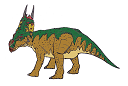
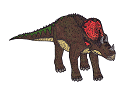
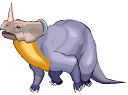
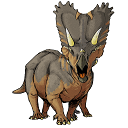
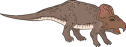
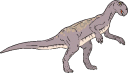
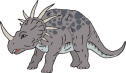
Ceratopsians dinosaurs such as Triceratops, Styracosaurus, Centrasaurus and Monoclonius
Welcome


Dinosaur Books
   Dinotopia
   Fiction
   Jurassic Park
   Kids
   Pop-Up Books
   Science
   Sticker Books
   Walking With Dinosaurs
   More Dinosaur Books


Dinosaur Calendars


Dinosaur Clothes


Dinosaur Crosswords


Dinosaur Facts
   Amazing Dinosaurs
   Classification
      Ornithischia
         Ankylosaurs
         Ceratopsians
         Marginocephalia
         Ornithopods
         Pachycephalosaurs
         Stegosaurs
      Saurischia
         Prosauropods
         Sauropods
         Theropods
   Definition
   Diet
   Eggs
   Extinction
   Family Tree
   Fossils
         Footprints
   Life Span
   Living Dinosaurs?
   Myths
   Timeline
      Triassic Period
      Jurassic Period
      Cretaceous Period
   World
      African Dinosaurs
      Antarctic Dinosaurs
      Asian Dinosaurs
      Australian Dinosaurs
      European Dinosaurs
      Indian Dinosaurs
      N. American Dinosaurs
      S. American Dinosaurs


Dinosaur Fun
   Action Figures
   Games
   Jigsaws
   Lego
   Lunchboxes
   Models
   Placemats
   Plush Toys
   More Dinosaur Fun


Dinosaur Games


Dinosaur Jokes


Dinosaur Museums
   UK Dinosaur Museums
   USA Dinosaur Museums
   More Dinosaur Museums


Dinosaur Names


Dinosaur Pictures


Dinosaur Posters


Dinosaur Scientists
   Charles Darwin
   Mary Anning
   Sir Richard Owen
   More Dinosaur Scientists


Dinosaur Software


Dinosaur Toys


Dinosaur Types
   Allosaurus
   Ankylosaurus
   Apatosaurus
   Baryonyx
   Brachiosaurus
   Centrosaurus
   Ceratosaurus
   Coelophysis
   Deinonychus
   Dilophosaurus
   Diplodocus
   Euoplocephalus
   Iguanodon
   Kentrosaurus
   Lambeosaurus
   Maiasaura
   Megalosaurus
   Microraptor
   Monoclonius
   Pachycephalosaurus
   Parasaurolophus
   Pentaceratops
   Protoceratops
   Saltopus
   Saurolophus
   Seismosaurus
   Spinosaurus
   Stegosaurus
   Styracosaurus
   Supersaurus
   Triceratops
   Tyrannosaurus Rex
   Velociraptor
   More Dinosaur Types


Dinosaur Video Games


Dinosaur Videos
   DVDs
      Jurassic Park
      Walking With Dinosaurs
   VHS Video


Dinosaur Word Search


Other Prehistoric Animals
   Ambulocetus
   Ammonites
   Andrewsarchus
   Archaeopteryx
   Basilosaurus
   Belemnites
   Brontotheres
   Chalicotheres
   Champsosaurs
   Coelacanth
   Cynodonts
   Dicynodonts
   Dimetrodon
   Gastornis
   Glyptodonts
   Gorgonopsians
   Hesperornis
   Hyracotherium
   Ichthyosaurs
   Mammal-like Reptiles
   Mammoths
   Mastodons
   Megaloceros
   Megalodon
   Meganeura Monyi
   Megatherium
   Mosasaurs
   Moschops
   Pakicetus
   Paraceratherium
   Phorusrhacids
   Placoderms
   Plesiosaurs
   Pliosaurs
   Pterosaurs
   Sea Scorpions
   Smilodon
   Spiny Sharks
   Tiktaalik
   Titanoboa
   Trilobites
   More Prehistoric Animals


Dinosaur Links
   Dinosaur Hangman
   Dinosaurs News
   Dinosaurs Parks

Educational Products
(Advertisements)
   Make Math Fun!
   Super Science Projects
   24 Hour Science

Science Links
   Science Downloads
   Science eBooks


Dinosaur Jungle   >   Dinosaur Facts   >   Classification   >   Ornithischia   >   Ceratopsians

Ceratopsian Dinosaurs


Scientific Classification
  Kingdom Animalia
  Phylum Chordata
  Class Sauropsida
  Superorder Dinosauria
  Order Ornithischia
  Suborder Cerapoda
  (unranked) Marginocephalia
  Infraorder Ceratopsia
The Ceratopsia (meaning "horned faces") are an infraorder of herbivorous (plant-eating) dinosaurs, that were characterized by having beaks. Early members of this infraorder, such as Psittacosaurus, were bipedal (walking on two legs). Later Ceratopsians tended to be much larger and quadrupedal (walking on four legs), often had elaborate neck frills and facial horns, and included dinosaurs such as Triceratops and Styracosaurus.

Ceratopsians first appeared during the late Jurassic period and survived until the end of the Cretaceous period. At the end of the Cretaceous. about 65 million years ago, the last Ceratopsians, along with all the other remaining non-avian dinosaurs, died out during a mass extinction.

The Ceratopsia infraorder, together with the infraorders of Pachycephalosauria ("thick-headed lizards") and Ornithopoda ("bird feet"), form the the suborder Cerapoda of the Ornithischian dinosaurs. Ceratopsians are sometimes grouped together with Pachycephalosaurs as the Marginocephalia ("fringed heads"), since the these two infraorders share some common features and appear to be related.

Dinosaur Classification

The skull of Ceratopsians is the most common part of the animal to be preserved as a fossil (in contrast to other dinosaurs, where the skulls are often not found). Indeed, a number of species of Ceratopsians are known only from their skulls.

Ceratopsian skulls:


Albertoceratops


Anchiceratops


Avaceratops


Centrosaurus


Chasmosaurus


Monoclonius
 

24 Hour Science Projects

Ceratopsian Dinosaur Timeline:


Ceratopsian dinosaurs first appeared during the late Jurassic, about 156 million years ago, and survived until the end of the Cretaceous period, about 65 million years ago

Ceratopsian dinosaurs first appeared during the late Jurassic, about 156 million years ago, and survived until the end of the Cretaceous period, about 65 million years ago

Making Math More Fun - Math Games Package

Types of Ceratopsian Dinosaur


Dinosaurs Triceratops
Dinosaurs Triceratops Poster
Buy at AllPosters.com


Styracosaurus with a Massive Horned Frill
Styracosaurus with a Massive Horned Frill Photographic Print
Buy at AllPosters.com
Here is a list of some Ceratopsian dinosaurs:

Dinosaur

Achelousaurus
Achelousaurus
 

Agujaceratops
Agujaceratops
 

Anchiceratops
Anchiceratops
 

Avaceratops
Avaceratops
 

Centrosaurus
Centrosaurus
 

Chasmosaurus
Chasmosaurus
 

Diabloceratops
Diabloceratops
 

Eotriceratops
Eotriceratops
 

Monoclonius
Monoclonius
 

Pachyrhinosaurus
Pachyrhinosaurus
 

Pentaceratops
Pentaceratops
 

Protoceratops
Protoceratops
 

Psittacosaurus
Psittacosaurus
 

Styracosaurus
Styracosaurus
 

Torosaurus
Torosaurus
 

Triceratops
Triceratops
 

Zuniceratops
Zuniceratops


Making Math More Fun - Math Games Package

Related Information & Resources


See Also
24 Hour Science Projects


Ceratopsian Dinosaur Books


Here are some books from Amazon.com:

Disclosure: Products details and descriptions provided by Amazon.com. Our company may receive a payment if you purchase products from them after following a link from this website.

New Perspectives on Horned Dinosaurs: The Royal Tyrrell Museum Ceratopsian Symposium (Life of the Past)
Indiana University Press
Hardcover (608 pages)

New Perspectives on Horned Dinosaurs: The Royal Tyrrell Museum Ceratopsian Symposium (Life of the Past)
List Price: $110.00*
Lowest New Price: $74.25*
Not yet published*
*(As of 15:05 Pacific 11 Mar 2010 More Info)


Click Here
Product Description:

Easily distinguished by the horns and frills on their skulls, ceratopsids were one of the most successful of all dinosaurs. This volume presents a broad range of cutting-edge research on the functional biology, behavior, systematics, paleoecology, and paleogeography of the horned dinosaurs, and includes descriptions of newly identified species.

Horned Dinosaurs: The Ceratopsians (The Dinosaur Library)
By Thom Holmes

Enslow Publishers
Library Binding (128 pages; 1)

Horned Dinosaurs: The Ceratopsians (The Dinosaur Library)
List Price: $26.60*
Lowest New Price: $26.60*
Lowest Used Price: $1.99*
Usually ships in 2 to 5 weeks*
*(As of 15:05 Pacific 11 Mar 2010 More Info)


Click Here
Horns and Beaks: Ceratopsian and Ornithopod Dinosaurs (Life of the Past)
Indiana University Press
Hardcover (384 pages)

Horns and Beaks: Ceratopsian and Ornithopod Dinosaurs (Life of the Past)
List Price: $49.95*
Lowest New Price: $32.97*
Lowest Used Price: $29.99*
Usually ships in 24 hours*
*(As of 15:05 Pacific 11 Mar 2010 More Info)


Click Here
Product Description:
Horns and Beaks completes Ken Carpenter’s series on the major dinosaur types. As with his volumes on armored, carnivorous, and sauropodomorph dinosaurs, this book collects original and new information, reflecting the latest discoveries and research on these two groups of animals. The Ornithopods include Iguanodon, one of the first dinosaurs ever discovered and analyzed, and perhaps the most common and best-documented group, the hadrosaurs or "duckbilled dinosaurs." The Ceratopsians include Triceratops, known for its distinctive three-horned skull and protective collar.

Contributors are Michael K. Brett-Surman, Kathleen Brill, Kenneth Carpenter, Benjamin S. Creisler, Tony DiCroce, Andrew A. Farke, Peter M. Galton, David Gilpin, Thomas M. Lehman, Nate L. Murphy, Christopher J. Ott, Gregory S. Paul, Xabier Pereda Suberbiola, Albert Prieto-Marquez, Bruce Rothschild, José Ignacio Ruiz-Omeñaca, Darren H. Tanke, Mark Thompson, David Trexler, and Jonathan R. Wagner.

A gigantic ceratopsian dinosaur, Triceratops maximus, new species (American Museum novitates)
By Barnum Brown

American Museum of Natural History
Unknown Binding (9 pages)
Lowest Used Price: $85.88*
*(As of 15:05 Pacific 11 Mar 2010 More Info)


Click Here
Brachyceratops,: A ceratopsian dinosaur from the Two Medicine formation of Montana, with notes on associated fossil reptiles, (Professional paper / Geological Survey)
By Charles W Gilmore

Govt. Print. Off
Unknown Binding (45 pages)
 
Protoceratops andrewsi, a pre-ceratopsian dinosaur from Mongolia (American Museum novitates)
By Walter Granger

By order of the Trustees of The American Museum of Natural History
Unknown Binding (9 pages)
 
Horns and Beaks: Ceratopsian and Ornithopod Dinosaurs (Life of the Past)
By Kenneth Carpenter

Indiana University Press
Hardcover
 
On Protoceratops, a primitive ceratopsian dinosaur from the Lower Cretaceous of Mongolia (American Museum novitates)
By William K Gregory

American Museum of Natural History
Unknown Binding (9 pages)
 
Occipital condyle in the Ceratopsian dinosaur Triceratops, with comments on body size variation (Contributions from the Museum of Paleontology, The University of Michigan)
By Jason S Anderson

Museum of Paleontology, University of Michigan
Unknown Binding


Linking to This Page


Although this site is run on a commercial basis, we do hope it will be useful and interesting for students and teachers. We welcome people linking to this website, or citing us in their school and educational projects (remember in school projects and papers, you should always cite your sources).

The URL of this web page, is:


If you want to link to this web page from your own web site, you can use the following HTML code:


DinosaurJungle.com is
Copyright © 2006-2009, Answers 2000 Limited

In Association With Amazon.com
In Assocation With AllPosters.com


CERTAIN CONTENT THAT APPEARS ON THIS SITE COMES FROM AMAZON SERVICES LLC. THIS CONTENT IS PROVIDED 'AS IS' AND IS SUBJECT TO CHANGE OR REMOVAL AT ANY TIME.

Disclosure: Our company's websites' content (including this website's content) includes advertisements for our own company's websites, products, and services, and for other organization's websites, products, and services. In the case of links to other organization's websites, our company may receive a payment, (1) if you purchase products or services, or (2) if you sign-up for third party offers, after following links from this website. Unless specifically otherwise stated, information about other organization's products and services, is based on information provided by that organization, the product/service vendor, and/or publicly available information - and should not be taken to mean that we have used the product/service in question. Additionally, our company's websites contain some adverts which we are paid to display, but whose content is not selected by us, such as Google AdSense ads. For more detailed information, please see Advertising/Endorsements Disclosures

Privacy   Terms Of Use   Advertising/Endorsements Disclosures