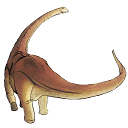
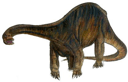
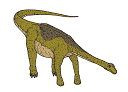
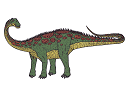
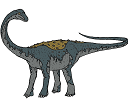
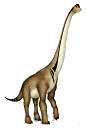
Sauropod dinosaurs such as Apatosaurus (Brontosaurus), Brachiosaurus, Diplodocus and others
Welcome


Dinosaur Books
   Dinotopia
   Fiction
   Jurassic Park
   Kids
   Pop-Up Books
   Science
   Sticker Books
   Walking With Dinosaurs
   More Dinosaur Books


Dinosaur Calendars


Dinosaur Clothes


Dinosaur Crosswords


Dinosaur Facts
   Amazing Dinosaurs
   Classification
      Ornithischia
         Ankylosaurs
         Ceratopsians
         Marginocephalia
         Ornithopods
         Pachycephalosaurs
         Stegosaurs
      Saurischia
         Prosauropods
         Sauropods
         Theropods
   Definition
   Diet
   Eggs
   Extinction
   Family Tree
   Fossils
         Footprints
   Life Span
   Living Dinosaurs?
   Myths
   Timeline
      Triassic Period
      Jurassic Period
      Cretaceous Period
   World
      African Dinosaurs
      Antarctic Dinosaurs
      Asian Dinosaurs
      Australian Dinosaurs
      European Dinosaurs
      Indian Dinosaurs
      N. American Dinosaurs
      S. American Dinosaurs


Dinosaur Fun
   Action Figures
   Games
   Jigsaws
   Lego
   Lunchboxes
   Models
   Placemats
   Plush Toys
   More Dinosaur Fun


Dinosaur Games


Dinosaur Jokes


Dinosaur Museums
   UK Dinosaur Museums
   USA Dinosaur Museums
   More Dinosaur Museums


Dinosaur Names


Dinosaur Pictures


Dinosaur Posters


Dinosaur Scientists
   Charles Darwin
   Mary Anning
   Sir Richard Owen
   More Dinosaur Scientists


Dinosaur Software


Dinosaur Toys


Dinosaur Types
   Allosaurus
   Ankylosaurus
   Apatosaurus
   Baryonyx
   Brachiosaurus
   Centrosaurus
   Ceratosaurus
   Coelophysis
   Deinonychus
   Dilophosaurus
   Diplodocus
   Euoplocephalus
   Iguanodon
   Kentrosaurus
   Lambeosaurus
   Maiasaura
   Megalosaurus
   Microraptor
   Monoclonius
   Pachycephalosaurus
   Parasaurolophus
   Pentaceratops
   Protoceratops
   Saltopus
   Saurolophus
   Seismosaurus
   Spinosaurus
   Stegosaurus
   Styracosaurus
   Supersaurus
   Triceratops
   Tyrannosaurus Rex
   Velociraptor
   More Dinosaur Types


Dinosaur Video Games


Dinosaur Videos
   DVDs
      Jurassic Park
      Walking With Dinosaurs
   VHS Video


Dinosaur Word Search


Other Prehistoric Animals
   Ambulocetus
   Ammonites
   Andrewsarchus
   Archaeopteryx
   Basilosaurus
   Belemnites
   Brontotheres
   Chalicotheres
   Champsosaurs
   Coelacanth
   Cynodonts
   Dicynodonts
   Dimetrodon
   Gastornis
   Glyptodonts
   Gorgonopsians
   Hesperornis
   Hyracotherium
   Ichthyosaurs
   Mammal-like Reptiles
   Mammoths
   Mastodons
   Megaloceros
   Megalodon
   Meganeura Monyi
   Megatherium
   Mosasaurs
   Moschops
   Pakicetus
   Paraceratherium
   Phorusrhacids
   Placoderms
   Plesiosaurs
   Pliosaurs
   Pterosaurs
   Sea Scorpions
   Smilodon
   Spiny Sharks
   Tiktaalik
   Titanoboa
   Trilobites
   More Prehistoric Animals


Dinosaur Links
   Dinosaur Hangman
   Dinosaurs News
   Dinosaurs Parks

Educational Products
(Advertisements)
   Make Math Fun!
   Super Science Projects
   24 Hour Science

Science Links
   Science Downloads
   Science eBooks


Dinosaur Jungle   >   Dinosaur Facts   >   Classification   >   Saurischia   >   Sauropods

Sauropod Dinosaurs


Scientific Classification
  Kingdom Animalia
  Phylum Chordata
  Class Sauropsida
  Superorder Dinosauria
  Order Saurischia
  Suborder Sauropodomorpha
  Infraorder Sauropoda
The Sauropoda (meaning "lizard-footed") dinosaurs were a infraorder of the the Saurischian. Together with the infraorder Prosauropods, they form the Sauropodomorpha) suborder of Saurischia. Dinosaurs in the Sauropod infrarder include, among others, Apatosaurus (also known as "Brontosaurus"), Brachiosaurus, and Diplodocus.

Sauropods first appeared during the later part of Triassic period, and at that time resembled their sister infraorder, the Prosauropods. By the late Jurassic period, Sauropods had become extremely widespread, and they survived until the end of the Cretaceous period, about 65 million years ago. Of course during all this time, no single species survived - instead a succession of different Sauropod lineages appeared at different times. At the end of Cretaceous, the Sauropods finally became extinct, along with all the other non-avian dinosaurs.

Dinosaur Classification

Sauropod dinosaurs were herbivorous (plant-eating). They were quadrupedal (walking on four legs), and they had thick pillar-like legs with five toes, although only three toes had claws. They had long necks and small heads and usually had long tails.. Additionally, some Sauropods had armor such bony osteoderms (found for example in Ampelosaurus and Saltasaurus), clubs in their tails (for example in Shunosaurus), or spined-backs (for example in Augustinia).

Sauropods are of course well-known for being large animals. Even the smallest dwarf species of Sauropod were 20 feet (6 meters) long, and the largest Sauropods were at least 130 feet (40 meters) long. There is evidence that there may have been some species that grew to 180 to 200 feet (55 to 60 meters) in length.

Why Sauropod evolved to become so large remains a matter of debate. Clearly there was some evolutionary advantage to being such huge sizes, but we can not entirely sure what it is. Some hypotheses that have been proposed include the relative immunity from predators that large size conveys, longer life spans, greater energy efficiency, or simply the fact that large-size allows herbivores to digest food more effectively.

There is a good evidence (for example fossilized trackways) that many species of Sauropods lived in herds. It is thought that many herds were separated by age, as juvenile animals appear to have eaten a different diet from adults.

24 Hour Science Projects

Sauropod Timeline:


Sauropods first appeared during the early Jurassic period, and survived until the end of the Cretaceous period, about 65 million years ago

Sauropods first appeared during the early Jurassic period, and survived until the end of the Cretaceous period, about 65 million years ago

24 Hour Science Projects

Types of Sauropod Dinosaur


Dinosuars Brachiosaurus
Dinosaurs Brachiosaurus Poster
Buy at AllPosters.com


Apatosaurus
Apatosaurus Giclee Print
Phillipps,...
Buy at AllPosters.com
Here is a list of some Sauropod dinosaurs:

Dinosaur

Alamosaurus
Alamosaurus
 

Ampelosaurus
Ampelosaurus
 

Apatosaurus
Apatosaurus


Argentinosaurus
Argentinosaurus
 

Brachiosaurus
Brachiosaurus
 

Camarasaurus
Camarasaurus
 

Diplodocus
Diplodocus
 

Giraffatitan
Giraffatitan
 

Magyarosaurus
Magyarosaurus
 

Mamenchisaurus
Mamenchisaurus
 

Melanorosaurus
Melanorosaurus
 

Nemegtosaurus
Nemegtosaurus
 

Nigersaurus
Nigersaurus
 

Paralititan
Paralititan
 

Saltasaurus
Saltasaurus
 

Seismosaurus
Seismosaurus
 

Supersaurus
Supersaurus


Ultrasaurus
Ultrasaurus


Making Math More Fun - Math Games Package

Related Information & Resources


See Also
Making Math More Fun - Math Games Package


Sauropod Books


Here are some books from Amazon.com:

Disclosure: Products details and descriptions provided by Amazon.com. Our company may receive a payment if you purchase products from them after following a link from this website.

The Sauropods: Evolution and Paleobiology
University of California Press
Hardcover (358 pages)

The Sauropods: Evolution and Paleobiology
List Price: $70.00*
Lowest New Price: $47.25*
Lowest Used Price: $56.00*
Usually ships in 24 hours*
*(As of 14:56 Pacific 9 Mar 2010 More Info)


Click Here
Product Description:
Sauropod dinosaurs were the largest animals ever to walk the earth, and they represent a substantial portion of vertebrate biomass and biodiversity during the Mesozoic Era. The story of sauropod evolution is told in an extensive fossil record of skeletons and footprints that span the globe and 150 million years of earth history. This generously illustrated volume is the first comprehensive scientific summary of sauropod evolution and paleobiology. The contributors explore sauropod anatomy, detail its variations, and question the myth that life at large size led to evolutionary stagnation and eventual replacement by more "advanced" herbivorous dinosaurs. Chapters address topics such as the evolutionary history and diversity of sauropods; methods for creating three-dimensional reconstructions of their skeletons; questions of sauropod herbivory, tracks, gigantism, locomotion, reproduction, growth rates, and more. This book, together with the recent surge in sauropod discoveries around the world and taxonomic revisions of fragmentary genera, will shed new light on "nature's greatest extravagances."
Gigantic Long-Necked Plant-Eating Dinosaurs: The Prosauropods and Sauropods (Dinosaur Library (Hillside, N.J.).)
By Thom Holmes

Enslow Publishers
Library Binding (128 pages; 1)

Gigantic Long-Necked Plant-Eating Dinosaurs: The Prosauropods and Sauropods (Dinosaur Library (Hillside, N.J.).)
List Price: $26.60*
Lowest Used Price: $0.27*
*(As of 14:56 Pacific 9 Mar 2010 More Info)


Click Here
Adaptive radiation in sauropod dinosaurs: bone histology indicates rapid evolution of giant body size through acceleration [An article from: Organisms Diversity & Evolution]
By P.M. Sander, E. Buffetaut & Sute

Elsevier
Digital

Adaptive radiation in sauropod dinosaurs: bone histology indicates rapid evolution of giant body size through acceleration [An article from: Organisms Diversity & Evolution]
List Price: $8.95*
Lowest New Price: $8.95*
Available for download now*
*(As of 14:56 Pacific 9 Mar 2010 More Info)


Click Here
Product Description:
This digital document is a journal article from Organisms Diversity & Evolution, published by Elsevier in 2004. The article is delivered in HTML format and is available in your Amazon.com Media Library immediately after purchase. You can view it with any web browser.

Description:
The well-preserved histology of the geologically oldest sauropod dinosaur from the Late Triassic allows new insights into the timing and mechanism of the evolution of the gigantic body size of the sauropod dinosaurs. The oldest sauropods were already very large and show the same long-bone histology, laminar fibro-lamellar bone lacking growth marks, as the well-known Jurassic sauropods. This bone histology is unequivocal evidence for very fast growth. Our histologic study of growth series of the Norian Plateosaurus indicates that the sauropod sistergroup, the Late Triassic and early Jurassic Prosauropoda, reached a much more modest body size in a not much shorter ontogeny. Increase in growth rate compared to the ancestor (acceleration) is thus the underlying process in the phylogenetic size increase of sauropods. Compared to all other dinosaur lineages, sauropods were not only much larger but evolved very large body size much faster. The prerequisite for this increase in growth rate must have been a considerable increase in metabolic rate, and we speculate that a bird-like lung was important in this regard.
Early evolution and higher-level phylogeny of sauropod dinosaurs (Society of Vertebrate Paleontology memoir)
By Jeffrey A Wilson

Society of Vertebrate Paleontology
Unknown Binding (68 pages)
Lowest Used Price: $20.00*
*(As of 14:56 Pacific 9 Mar 2010 More Info)


Click Here
A Fourth New Sauropod Dinosaur from the Upper Jurassic of the Colorado Plateau and Sauropod Bipedalism
By J. A. Jensen

Brigham Young University
Paperback
Lowest Used Price: $5.00*
*(As of 14:56 Pacific 9 Mar 2010 More Info)


Click Here
165 Million Years of Dinosaurs/All About Theropods, Sauropods, and a T. Rex or Two (Close Up)
By Francois Gohier

Silver Burdett Pr
Paperback
List Price: $11.96*
Lowest Used Price: $2.56*
*(As of 14:56 Pacific 9 Mar 2010 More Info)


Click Here


Linking to This Page


Although this site is run on a commercial basis, we do hope it will be useful and interesting for students and teachers. We welcome people linking to this website, or citing us in their school and educational projects (remember in school projects and papers, you should always cite your sources).

The URL of this web page, is:


If you want to link to this web page from your own web site, you can use the following HTML code:


DinosaurJungle.com is
Copyright © 2006-2009, Answers 2000 Limited

In Association With Amazon.com
In Assocation With AllPosters.com


CERTAIN CONTENT THAT APPEARS ON THIS SITE COMES FROM AMAZON SERVICES LLC. THIS CONTENT IS PROVIDED 'AS IS' AND IS SUBJECT TO CHANGE OR REMOVAL AT ANY TIME.

Disclosure: Our company's websites' content (including this website's content) includes advertisements for our own company's websites, products, and services, and for other organization's websites, products, and services. In the case of links to other organization's websites, our company may receive a payment, (1) if you purchase products or services, or (2) if you sign-up for third party offers, after following links from this website. Unless specifically otherwise stated, information about other organization's products and services, is based on information provided by that organization, the product/service vendor, and/or publicly available information - and should not be taken to mean that we have used the product/service in question. Additionally, our company's websites contain some adverts which we are paid to display, but whose content is not selected by us, such as Google AdSense ads. For more detailed information, please see Advertising/Endorsements Disclosures

Privacy   Terms Of Use   Advertising/Endorsements Disclosures